In summary
Screens are everywhere now. Tablets, laptops, the big interactive board at the front of a room. So, it’s no surprise parents ask us where all of it fits in childcare, and whether a three-year-old should be near a device at all.
Fair question. The short answer is that it depends entirely on how you use it.
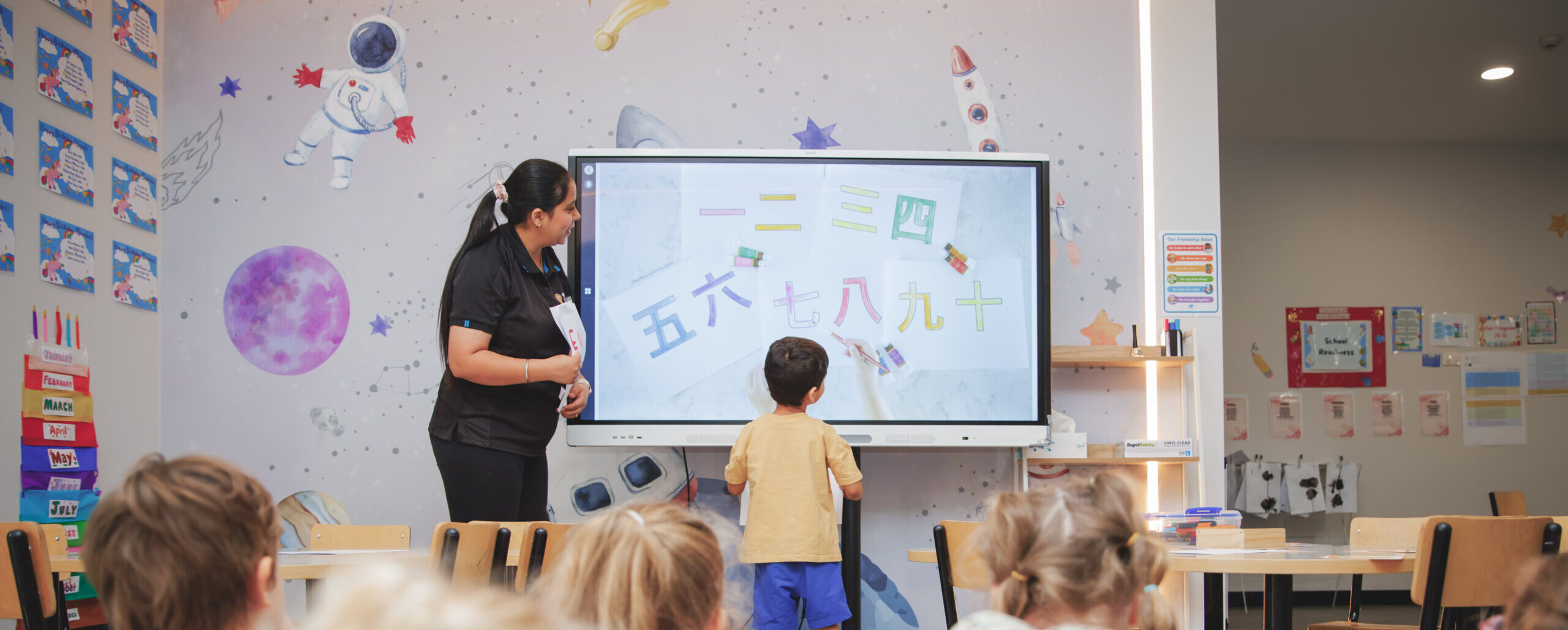
At Mini Masterminds, technology sits in the background. Most of a child’s day is spent building, painting, climbing, talking and playing outside. Digital tools come in around the edges. Used in small doses they can add a bit: a spark of creativity here, a new way into an idea there, some early confidence with the sort of technology these kids will use for the rest of their lives.
Here’s how we think about it.
It’s more than screen time. A lot more.
For an educator, technology is a kit of tools. The interactive whiteboard. Tablets for a guided activity. A digital microscope that turns a leaf into something huge and strange. Cameras to capture what a child made. The app we use to send families a photo from their child’s morning.
Each one has a job. None of them is there to babysit.
These kids are growing up with a phone in every adult pocket around them. That’s their world. Getting them started early, at their own level, gives them a foot up on skills they’ll lean on later at school.
Done properly, digital tools let children have a crack at solving a problem, get comfortable with how devices work, and tell a story using photos or drawings they made themselves. They press this, then that, and watch what happens. Cause, effect. And they get to talk the whole thing through with an educator sitting right beside them.
The point is always the doing.
Play leads. Technology follows.
Our educators build each digital moment around whatever the children are already into. If a room is deep in a project about bugs, that’s when the microscope comes out.
Day to day, it can look like a handful of things:
In our preschool program, we also bring in Reading Eggs and Mathseeds. Reading Eggs works the building blocks of reading, so phonics, new words, and making sense of a sentence, through games that get harder as a child gets better. Mathseeds does the same for counting, numbers, patterns and shapes.
Both run in short bursts, always with an educator, and they slot into the wider week as one tool out of many. The rest of the day still belongs to play, the sandpit, paint and a lot of talking.
Not much. And never for long.
Any decent early learning service watches this closely, both the amount of time and what’s actually going on during it. Our sessions are short. An educator runs them. They tie back to something the children are learning, and the kids are expected to pitch in: answer, ask, argue a bit, have a go. What doesn’t happen is a child left parked in front of a screen to fill a gap in the day.
Safety is baked into how we work.
Devices stay supervised, always. Children only ever see content that suits their age. Every digital activity has to earn its spot against a learning goal. When we photograph a child’s work, their privacy is protected. And screen time never crowds out the running-around, climbing, gloriously messy play that matters most.
That’s how good habits start young.
Used well, technology can open a door for a child who finds the usual routes tricky.
It gives some kids another way to communicate. It helps others pick up language. A child who learns best by seeing gets a picture to hold onto. A tablet game can quietly build fine motor control while the child thinks they’re just playing. And it lets an educator bend an activity to fit one particular child, so nobody ends up on the outer.
You matter here far more than we do. A child’s habits get set at home.
A few things that tend to work:
Screens are fine as one slice of the day. Just not the whole plate.
None of this is a hunch. It lines up with what educators see every day, and with the thinking behind Australia’s early learning framework: technology earns its keep when an adult guides it, when it grows out of something a child already loves, and when it sits beside real relationships and hands-on play. Leave a child alone in front of a screen for a long stretch and you lose all of that.
So, we keep asking the boring questions. When. How. Why. Every single time technology comes into a child’s day.
No. A tablet comes out when it earns its place, and loads of days go by with no screen at all.
Not on its own. In small amounts, with a purpose, and with an educator alongside, it can do really good. Balance is the whole game.
Yes, easily. Play is the centre of everything we do. Technology is one tool sitting in the drawer with all the others.
An educator is there for every digital activity, the content suits their age, and we hold a firm line on privacy and child safety.
It gives early literacy, problem-solving, talking and creativity a nudge, and those sit right alongside everything play already teaches them.
An approach where children learn by doing, exploring and mucking about, rather than sitting through formal lessons. It’s the backbone of good early education.
Any digital activity a qualified educator plans, supervises and joins in on, so it stays purposeful and never turns into idle screen time.
Knowing how to use technology safely and sensibly to learn, make things and stay in touch. Children build it slowly, much the same way they learn to read.
Time spent on a device with a screen. In the early years, the quality of that time and who’s alongside the child count for far more than the raw minutes.
The learning and care children receive from birth to around five, covering their development, wellbeing and first steps toward school.
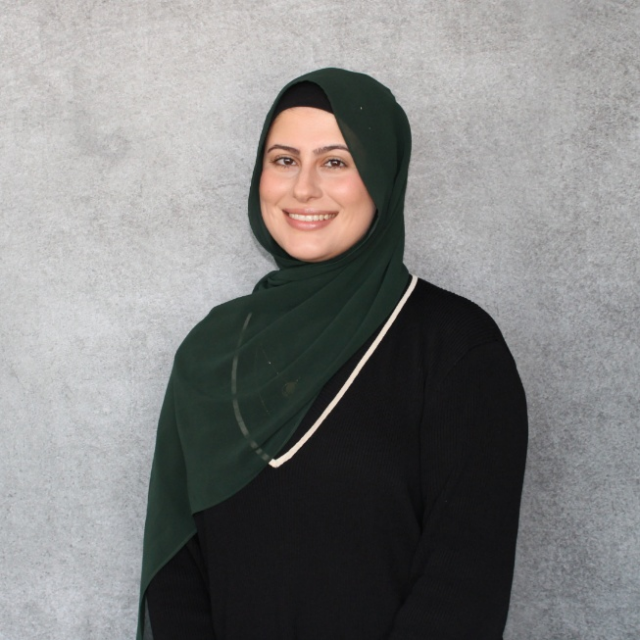
Maisah brings a wealth of knowledge and leadership experience to the Mini Masterminds Education Team. She holds a Bachelor of Social Science and a Master of Teaching, providing her with a strong foundation in child development, learning theory, and educational practice.
View Full Bio

 1300 336 464
 Book A Tour
 Enrol Now
 Contact Us
 Call Us