In Summary
Doing your research into the quality of a local childcare is a vital step in finding the right Centre for your family. If you’re researching early learning centres, you may have come across the term “Assessment and Rating” or seen a centre mention its National Quality Standard (NQS) rating. It’s one of the few genuinely independent checks on quality and safety in Australian childcare, so it’s worth understanding what it means, and what it looks like in practice.
Every long day care centre in Australia is assessed against the National Quality Standard, a framework covering seven areas:
An independent, authorised assessor visits the centre, watches the team in action, talks with educators and looks at how the service actually runs day to day. It’s a real look at what happens in the rooms. What the children experience in each individual room, and how the Centre interacts with the families.
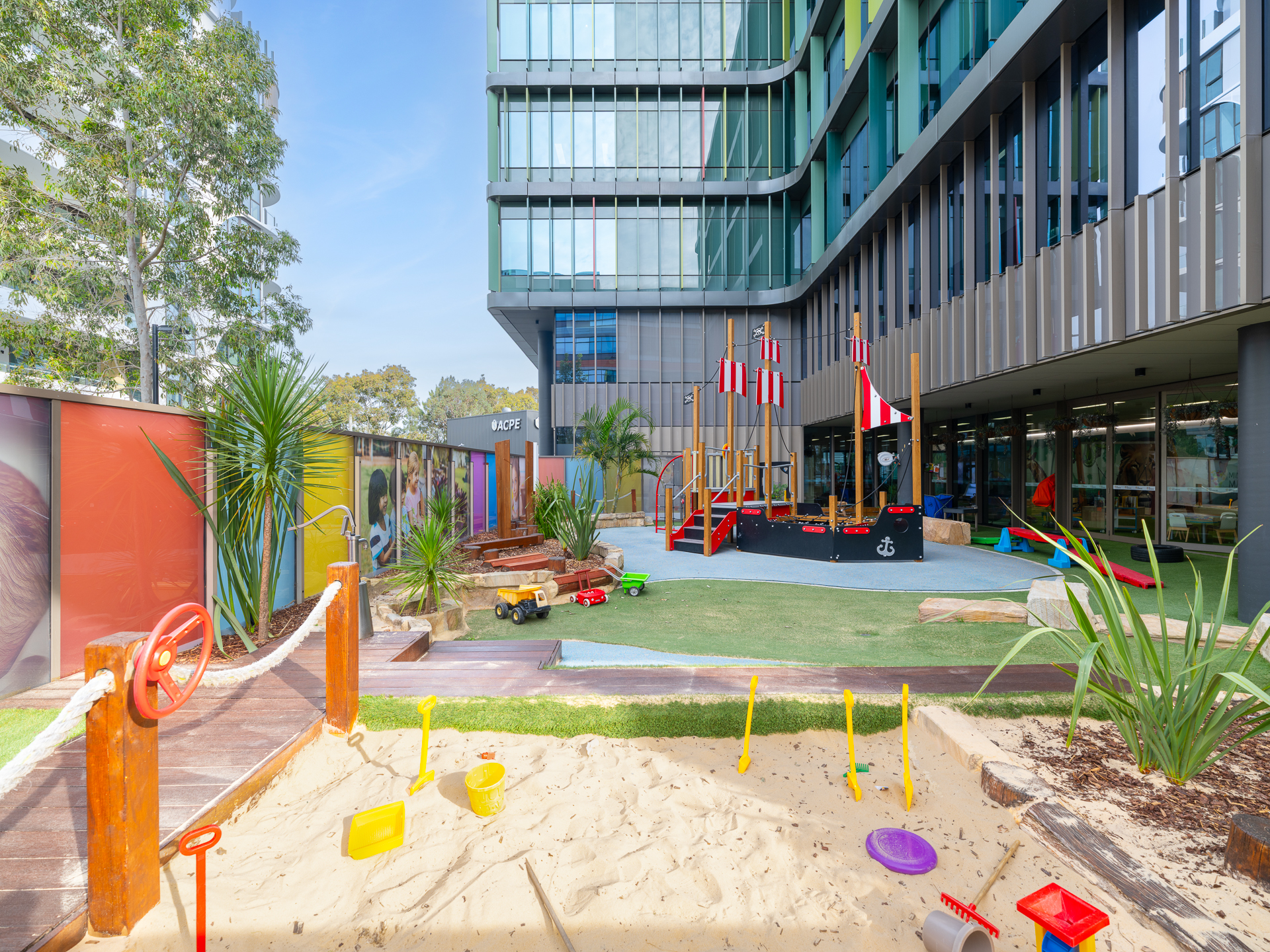
Our Homebush childcare centre recently went through this process and was rated Meeting the National Quality Standard, the national benchmark for quality across Australian education and care services.
As part of the assessment the Homebush Centre was noted that the philosophy is clearly evident in everyday practices. Educators were seen to establish respectful and responsive relationships with children by acknowledging their choices, listening to their ideas and responding to their individual needs
In the report, the assessor noted “children’s health and safety and relationships with children demonstrates the commitment to quality by the approved provider, educators and staff.” It was overall stated that “Your service is acknowledged for its achievements in meeting the National Quality Standard and striving for quality outcomes for children.”
Centre Director Nicole has led the team through this process since stepping into the role. Working with the team to strive for strong outcomes every day was a key focus and evident in the assessment. It was noted that “the team are building a positive culture through reflection, relationships and collaboration” and “educators engage warmly with children, fostering trusting relationships through meaningful conversations, shared experiences and respectful interactions.”
A Meeting rating means a centre has been independently assessed and found to be meeting the standard expected of every education and care service in Australia, the same standard families rely on regardless of which centre they choose. For a family comparing centres in Homebush and Sydney Olympic Park, it means:
An Assessment and Rating outcome is a point-in-time check, not a finish line. At Mini Masterminds Homebush, for example, the team’s day to day focus is on the relationships, environments and programs that were already there before the assessor walked in, and that continue after.
The positive feedback has only motivated the team further. The Nursery Team with their Baby Lead are currently on a special project of further stretch goals as part of the Mini Beginnings Nursery program.
At the recent Mini Masterminds Masters of Childcare Awards, on the back of the recent A&R processes, Mini Masterminds Homebush won the award for “The Most improved in Safety & Compliance”
Ratings and standards are one way to compare centres on paper. The best way to actually judge a daycare centre is to walk through it.
We’re incredibly proud of our Mini Masterminds Honebush team and this latest milestone.
If you’re looking for an early learning centre in Sydney Olympic Park and Homebush, we’d love to welcome you to our Centre.
Come and meet our Centre Director Nicole and the team, explore our learning environments and see why families choose Mini Masterminds for their child’s early learning journey.
What does “Meeting the National Quality Standard” mean?
Being rated Meeting the National Quality Standard (NQS) means our centre has been assessed against the seven quality areas that make up Australia’s national benchmark for quality in early childhood education and care. At Mini Masterminds Hombush, that covers everything from the educational program to the way our educators supervise, respond to and build relationships with children each day.
What are the seven National Quality Standard areas? The seven areas cover educational programs and practice, children’s health and safety, the physical environment, staffing arrangements, relationships with children, partnerships with families and communities, and governance and leadership.
How is the assessment actually carried out? An authorised assessor visits the centre in person, observes the educators and children, and reviews the centre’s practices against each of the seven quality areas. The assessor spends that time in the rooms at the centre itself, in this case our Homebush childcare centre, rather than reviewing paperwork from a distance.
Does a Meeting rating mean a centre stops improving? Not at all. Quality improvement is ongoing. Our team will continue to reflect on our practices, work with families and look for ways to further enhance the experiences we provide for children.
What does the NQS rating mean for families?
For families, a Meeting NQS rating provides reassurance that the centre is meeting the expected standards across key areas of education, care, safety, wellbeing and leadership. For parents comparing childcare in Sydney Olympic Park, Newington, Wentworth Point, Homebush and Rhodes, it is one of the few points of comparison that comes from an independent assessor rather than from the centre itself.
How does Mini Masterminds prioritise child safety?
Child safety is a key priority at our centre. Our educators focus on active supervision, safe environments, positive relationships and supporting children’s wellbeing throughout their day. Our Homebush team was recognised for that work at the recent Mini Masterminds Masters of Childcare Awards, winning Most Improved in Safety and Compliance.
Which Mini Masterminds centre received the Meeting NQS rating?
The rating was awarded to Mini Masterminds Homebush. It is one of two Mini Masterminds childcare centres in Sydney Olympic Park, alongside our Betty Cuthbert centre.
Which suburbs does the Sydney Olympic Park childcare centre serve?
The centre draws families from across Sydney Olympic Park and the surrounding suburbs, including Newington, Wentworth Point, Homebush, Homebush Bay, Rhodes, Liberty Grove, Concord West and Silverwater.
How can I check the NQS rating of a childcare centre near me?
Every service is required to display its rating certificate at the centre, and ratings are also published on the national registers maintained by the Australian Children’s Education and Care Quality Authority. Families comparing early learning centres in Sydney Olympic Park and nearby suburbs can look up any service before booking a tour.
What is the difference between Meeting NQS and Exceeding NQS?
Meeting NQS means a service provides quality education and care across all seven quality areas. Exceeding NQS means a service goes beyond those requirements in at least four of the seven areas, including at least two of quality areas 1, 5, 6 or 7. A service rated Exceeding in all seven areas can then apply for the Excellent rating, which only the national authority can award.
How often is a childcare centre assessed and rated?
There is no fixed schedule. Assessment and Rating visits are scheduled by the state regulatory authority, which in New South Wales is the Department of Education, and the timing depends on a service’s history and risk profile. A rating stays in place until the next assessment is completed.
How do I book a tour of the Sydney Olympic Park childcare centre?
You can book a tour through the Mini Masterminds Homebush centre page or by calling 1300 336 464. A tour is the best way to see the rooms, meet Centre Director Nicole and the team, and get a feel for the centre beyond the rating on paper.
National Quality Framework (NQF): The national system that regulates long day care, preschool, family day care and outside school hours care across Australia.
National Quality Standard (NQS): The benchmark within the NQF that sets out what quality looks like across seven quality areas.
Assessment and Rating (A&R): The process in which an authorised assessor visits a service, observes practice and rates it against the National Quality Standard.
Quality areas: The seven categories a service is rated against: educational program and practice, children’s health and safety, physical environment, staffing arrangements, relationships with children, partnerships with families and communities, and governance and leadership.
Meeting NQS: An overall rating confirming a service provides quality education and care across all seven quality areas.
Exceeding NQS: An overall rating for a service that goes beyond the standard in at least four of the seven quality areas.
Working Towards NQS: An overall rating for a service that provides a safe program but has one or more areas identified for improvement.
Authorised assessor: The independent officer from the state regulatory authority who carries out the assessment visit.
ACECQA: The Australian Children’s Education and Care Quality Authority, the national body that oversees the NQF and publishes service ratings.
Regulatory authority: The state or territory body responsible for assessing and rating services. In New South Wales this is the Department of Education.
Quality Improvement Plan (QIP): The document every service keeps setting out its strengths and the areas it is working on, which the assessor reviews as part of the visit.
Approved provider: The organisation approved to operate an education and care service, which for these centres is Mini Masterminds.
Long day care: An early learning service that cares for children for a full working day, usually ten to twelve hours, five days a week.
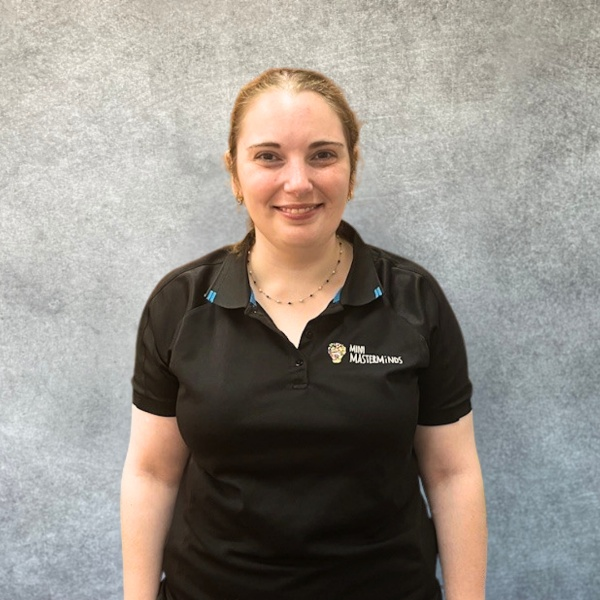
Nicole is an experienced early childhood educator with a Bachelor’s in Early Childhood Education and Care and a Master’s in Inclusive and Special Education, majoring in Early Childhood. Her academic background underpins her strong commitment to inclusive, equitable learning for all children.
View Full Bio

 1300 336 464
 Book A Tour
 Enrol Now
 Contact Us
 Call Us