At a Glance
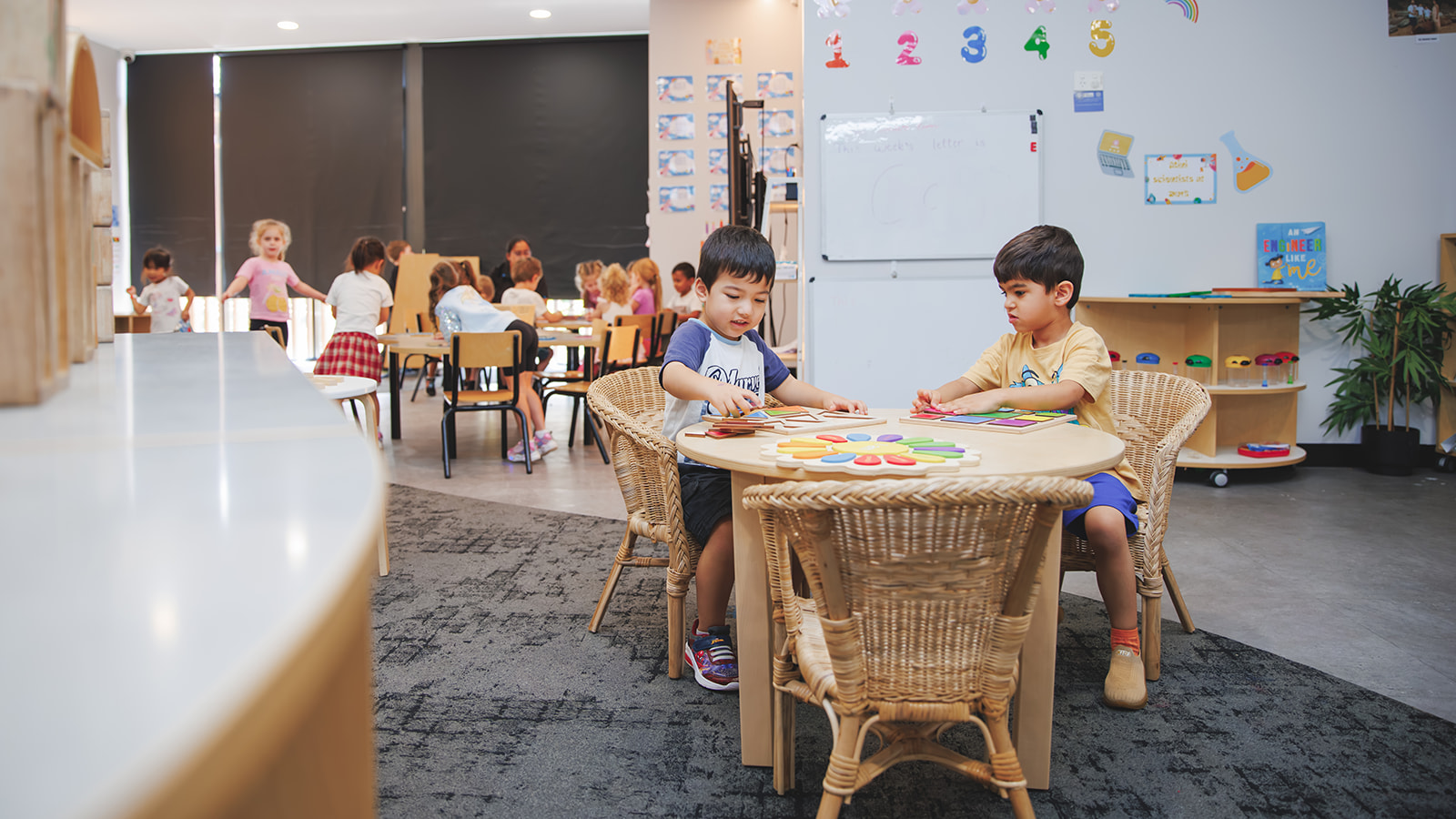
The environment a child learns in is far more than just a backdrop to play and education—it actively shapes how children feel, interact, and behave throughout the day. In early childhood settings, learning spaces have a direct influence on children’s emotional regulation, engagement, social interactions, and overall wellbeing.
At Mini Masterminds, we recognise that intentional learning environments are just as important as intentional teaching. When spaces are thoughtfully designed, children are more likely to feel calm, confident, and ready to learn.
In early childhood education, the learning environment is often referred to as the “third teacher,” alongside educators and families. This concept highlights that children are constantly learning from what they see, touch, and experience in their surroundings.
A well-designed space can:
On the other hand, cluttered, overstimulating, or poorly structured environments can contribute to frustration, dysregulation, and challenging behaviours.
Children’s behaviour is closely linked to how safe, supported, and regulated they feel in their environment. Several key environmental factors can influence this:
A clear, predictable layout helps children understand where to go and what to do. When spaces are well organised, children are less likely to feel overwhelmed or confused.
Open pathways, defined learning zones, and logical transitions between areas support independence and reduce behavioural challenges linked to uncertainty.
Young children are highly sensitive to sensory input. Loud, chaotic environments can quickly lead to overstimulation, which may present as irritability, withdrawal, or heightened emotional responses.
Spaces that balance active play with calm zones help children regulate their sensory needs throughout the day.
When children can independently access resources, they feel a sense of control and autonomy. This reduces frustration and encourages positive engagement.
Accessible shelves, clearly labelled materials, and child-height furniture empower children to make choices confidently.
All children need opportunities to pause, reset, and regulate their emotions. Calm spaces provide a safe environment for children to manage big feelings or take a break from group activity.
These spaces support emotional wellbeing and help reduce escalation in challenging moments.
Walls filled with excessive posters, bright colours, or cluttered displays can overwhelm some children, particularly those who are more sensitive to visual stimuli.
A balanced visual environment, where displays are purposeful and not overwhelming—supports focus and emotional regulation.
When a child displays challenging behaviour, it is often a reflection of their environment rather than defiance. Behaviour is a form of communication, and the learning space plays a key role in shaping how children express their needs.
For example:
By observing behaviour through an environmental lens, educators can make thoughtful adjustments that better support children’s needs.
Educators are key to creating and maintaining learning spaces that support positive behaviour. Intentional planning and ongoing reflection help ensure the environment continues to meet the needs of the children within it.
This includes:
Even small changes, like repositioning furniture or simplifying a resource area, can have a meaningful impact on children’s behaviour and wellbeing.
A high-quality learning environment doesn’t just support learning, it supports emotional safety. When children feel secure in their surroundings, they are more likely to explore, take risks in play, and engage positively with others.
Emotionally safe environments in a preschool program can help children:
This sense of safety is the foundation for positive behaviour and meaningful development.
At Mini Masterminds, we understand that behaviour is not separate from the environment, it is shaped by it. That’s why our learning spaces are intentionally designed to support curiosity, independence, and emotional wellbeing.
We focus on creating environments that are:
This balance allows children to thrive socially, emotionally, and cognitively.
Learning environments are powerful. They can either support or hinder children’s behaviour, depending on how they are designed and used.
When educators take a thoughtful, reflective approach to space design, they create environments where children feel understood, supported, and ready to learn.
At Mini Masterminds, we believe that when the environment works with the child, not against them, positive behaviour naturally follows.
Why does the learning environment affect children’s behaviour?
Children are far more sensitive to their physical surroundings than adults typically are. Research shows that environmental factors including noise levels, spatial organisation, visual complexity, and access to resources all have measurable effects on children’s social and emotional development. A systematic review published in a leading early childhood research journal found consistent links between physical and sensory environment factors and children’s self-regulation, social competence, and behaviour. Environments that are chaotic or overstimulating increase cortisol levels, the body’s stress hormone, which compromises children’s capacity to regulate their emotions and engage positively with others.
Conversely, well-designed spaces create conditions where children feel safe, understand what is expected of them, and can make independent choices. When the environment works with a child’s needs rather than against them, behaviour naturally becomes more settled, cooperative, and engaged. The space is not a neutral container; it actively communicates messages about safety, expectation, and possibility.
What is the “third teacher”?
The concept of the environment as the “third teacher” originates from the Reggio Emilia approach to early childhood education, developed in post-war Italy by educator Loris Malaguzzi. It holds that, alongside the educator and the family, the learning environment itself teaches. The space communicates values, invites curiosity, and shapes how children interact with materials, each other, and ideas. In the Reggio tradition, environments are designed with the same intentionality as a curriculum, using natural light, open-ended materials, purposeful displays, and defined spaces to provoke thinking and support wellbeing.
This principle has gained global recognition and now underpins best practice in early childhood environments worldwide. A systematic review of empirical studies from 2015 to 2025 on physical learning environments found four consistent themes: spatial organisation that promotes autonomy and collaboration; open-ended materials that stimulate exploration; sensory balance; and the importance of co-creating spaces with children. The “third teacher” is not a fixed design but a living, responsive environment that educators actively shape and reflect on.
How can a cluttered environment impact behaviour?
Visual and physical clutter places a significant cognitive load on young children. Research from Carnegie Mellon University found that heavily decorated classrooms disrupted children’s attention and reduced learning outcomes, with children in more visually busy environments spending more time off-task. For children with sensory sensitivities, ADHD, or anxiety, the impact is amplified: a cluttered environment can make it genuinely difficult to filter information, stay organised, and keep the body calm. This shows up in behaviour as increased movement, emotional volatility, or withdrawal.
Educators who have de-cluttered their environments consistently report visible improvements in children’s focus, attention, and emotional regulation, alongside reduced tension in the room overall. The goal is not a bare or sterile space, but one where everything present has a purpose and children are not competing with their surroundings for cognitive bandwidth. Displays that reflect children’s own work, neutral tones, and organised storage all support a calmer, more regulated environment.
What makes a good early childhood learning space?
A high-quality early childhood learning space is organised, predictable, and sensory-balanced. Research highlights several evidence-based design principles: clearly defined learning zones help children understand what behaviour is expected where; open pathways and accessible resources support independence and reduce frustration; and the inclusion of both active and calm areas allows children to self-regulate their energy and sensory needs across the day. Predictable layouts and consistent routines create the sense of security children need to explore and take risks in their learning.
Good spaces are also responsive. Educators should regularly observe how children use the environment and make adjustments based on what they see. A space that worked well for one group of children may need rethinking for another. Natural light, natural materials, child-height furniture, purposeful displays, and a calm colour palette all contribute to environments where children feel genuinely at home, and where positive behaviour follows naturally from a sense of safety and belonging.
Learning Environment
The physical, social, and emotional space where children learn and interact.
Self-Regulation
The ability to manage emotions, behaviour, and attention in different situations.
Co-Regulation
When an adult supports a child in managing emotions through calm interaction and guidance.
Sensory Overload
When a child becomes overwhelmed by too much sensory input such as noise, movement, or visual stimulation.

Maisah brings a wealth of knowledge and leadership experience to the Mini Masterminds Education Team. She holds a Bachelor of Social Science and a Master of Teaching, providing her with a strong foundation in child development, learning theory, and educational practice.
View Full Bio

 1300 336 464
 Book A Tour
 Enrol Now
 Contact Us
 Call Us