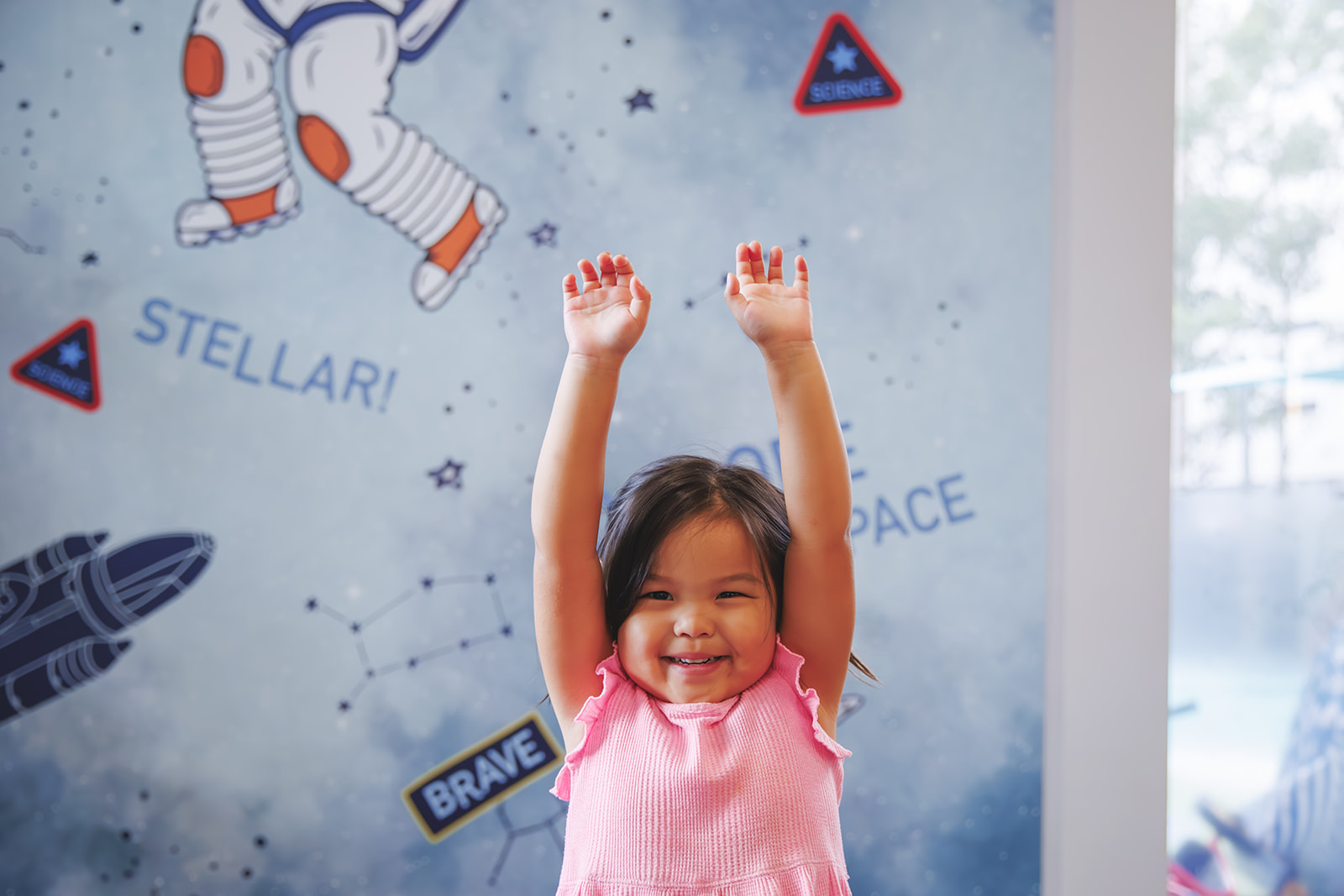
Big emotions are a natural and important part of early childhood. For young children, feelings like frustration, excitement, disappointment, or anger can feel overwhelming because they are still learning how to understand, name, and manage what’s happening inside them.
At Mini Masterminds, these moments are not seen as “behaviour problems”, they are seen as meaningful opportunities for learning, connection, and growth.
During the early years, children experience emotions in a very immediate and intense way. They may not yet have the language or self-regulation skills to express how they feel, which is why emotions often show up through behaviour.
When a child cries over a toy, struggles with transitions, or becomes upset during play, they are communicating something important, even if they don’t yet have the words to say it.
These moments give educators the chance to support children in:
Educators are central to helping children navigate big emotions. How adults respond in these moments shapes how children learn to understand and manage their feelings over time.
A calm, consistent, and supportive approach helps children feel safe, even when their emotions feel out of control.
Children often borrow emotional regulation from the adults around them. This is why co-regulation is such a powerful part of early learning environments.
When children feel understood, their emotional intensity often begins to settle.
Emotional regulation is not something children develop overnight. It grows through repeated experiences of being supported, understood, and guided.
When children are consistently supported through big emotions, they begin to:
These early skills carry through into school and later life, shaping how children interact with the world around them.
At Mini Masterminds, as an early learning centre, we believe emotional development is just as important as academic learning. Our environments are designed to support children in feeling safe, understood, and empowered to explore their emotions.
Educators play a vital role in this process, providing consistent co-regulation, guidance, and care that helps children feel secure even in their biggest moments.
Big emotions are not something to fix, they are something to support.
With patience, empathy, and the right guidance, these moments become powerful opportunities for children to learn about themselves and the world around them.
At Mini Masterminds childcare Bexley and surrounding Sydney suburbs, we see every emotional moment as a step toward building confident, emotionally aware learners.
Why do young children have such strong emotional reactions?
The intensity of emotions in young children is rooted in neuroscience. The prefrontal cortex, the area of the brain responsible for reasoning, impulse control, and emotional regulation, does not fully mature until early adulthood. In the early childhood years, children are primarily operating from the limbic system, which processes emotion in a raw and immediate way. This means that when a child feels frustrated, scared, or overwhelmed, they experience that feeling at full force with very little internal capacity to moderate it.
Research from Harvard University’s Center on the Developing Child confirms that the ability to regulate emotions develops through a complex interaction between brain architecture and environment, and that consistent, warm relationships with caregivers are central to building that capacity over time. Children are not choosing to be difficult. They are simply experiencing feelings that are bigger than their current skill set, which is why patient and supportive responses from educators make such a meaningful difference.
What is co-regulation?
Co-regulation is the process by which a caregiver or educator helps a child manage their emotional state through warm, responsive interaction. Rather than expecting children to calm themselves independently, co-regulation recognises that young children need an attuned adult to scaffold that process for them. In practice, it involves a calm tone of voice, steady body language, naming the child’s feelings aloud, and staying present without escalating. Over time, children internalise these experiences and begin to apply similar strategies themselves, gradually building genuine self-regulation skills.
Research published in journals including Frontiers in Education and NAEYC highlights that co-regulation is one of the most powerful tools available in early childhood settings, with measurable benefits for children’s emotional development, social skills, and even academic readiness. Importantly, co-regulation also benefits educators, with studies showing it reduces staff stress and creates a more positive learning environment for everyone in the room.
Should all emotional outbursts be stopped quickly?
Not necessarily, and in many cases the instinct to quickly distract or redirect a child away from distress can actually work against their development. When adults rush to stop an emotional outburst, children can learn to suppress their feelings rather than process them, which research suggests leads to more dysregulation over time, not less. The Education Hub’s synthesis of early childhood research cautions that ignoring a child’s display of negative emotion is associated with a lack of trust and poorer social and emotional outcomes.
The more constructive approach is to acknowledge the emotion first, stay present, and support the child through the feeling at their own pace. Safety is always the priority, and where a child’s behaviour poses a risk to themselves or others it should be calmly redirected. But for the everyday big feelings that arise in early learning environments, supporting children through the experience rather than moving them past it is what builds genuine emotional capacity. The American Psychological Association notes that children who learn to manage their emotions in this way are more likely to succeed academically and develop stronger relationships with peers.
How can educators stay calm in emotional moments?
Staying calm is a skill that educators can actively develop, and it starts with recognising that a child’s emotional outburst is not a personal challenge to manage but a communication that needs a response. Slow, deliberate breathing is one of the most evidence-backed tools available: it activates the parasympathetic nervous system and physically shifts the body out of a stress response. Maintaining a low, steady tone of voice and relaxed posture also signals safety to a dysregulated child, who is highly attuned to the emotional state of the adults around them.
Research from NAEYC emphasises that educators need to exercise their own self-regulatory skills in order to co-regulate effectively, and that reflective practice, including thinking about how one’s own emotional state changes across the day, builds long-term capacity for this work. Reframing also helps: reminding yourself that challenging behaviour is communication, not defiance, creates the mental space to respond with curiosity rather than frustration. Centres that invest in professional development around emotional intelligence and co-regulation consistently report lower staff burnout and a more positive, responsive environment for children and educators alike.
Emotional Regulation
The ability to manage and respond to emotional experiences in a healthy way.
Co-regulation
The process where an adult helps a child regulate emotions through calm presence and support.
Emotional Literacy
The ability to identify, understand, and express emotions.
Resilience
The ability to adapt and recover after challenges or difficult experiences.

 1300 336 464
 Book A Tour
 Enrol Now
 Contact Us
 Call Us