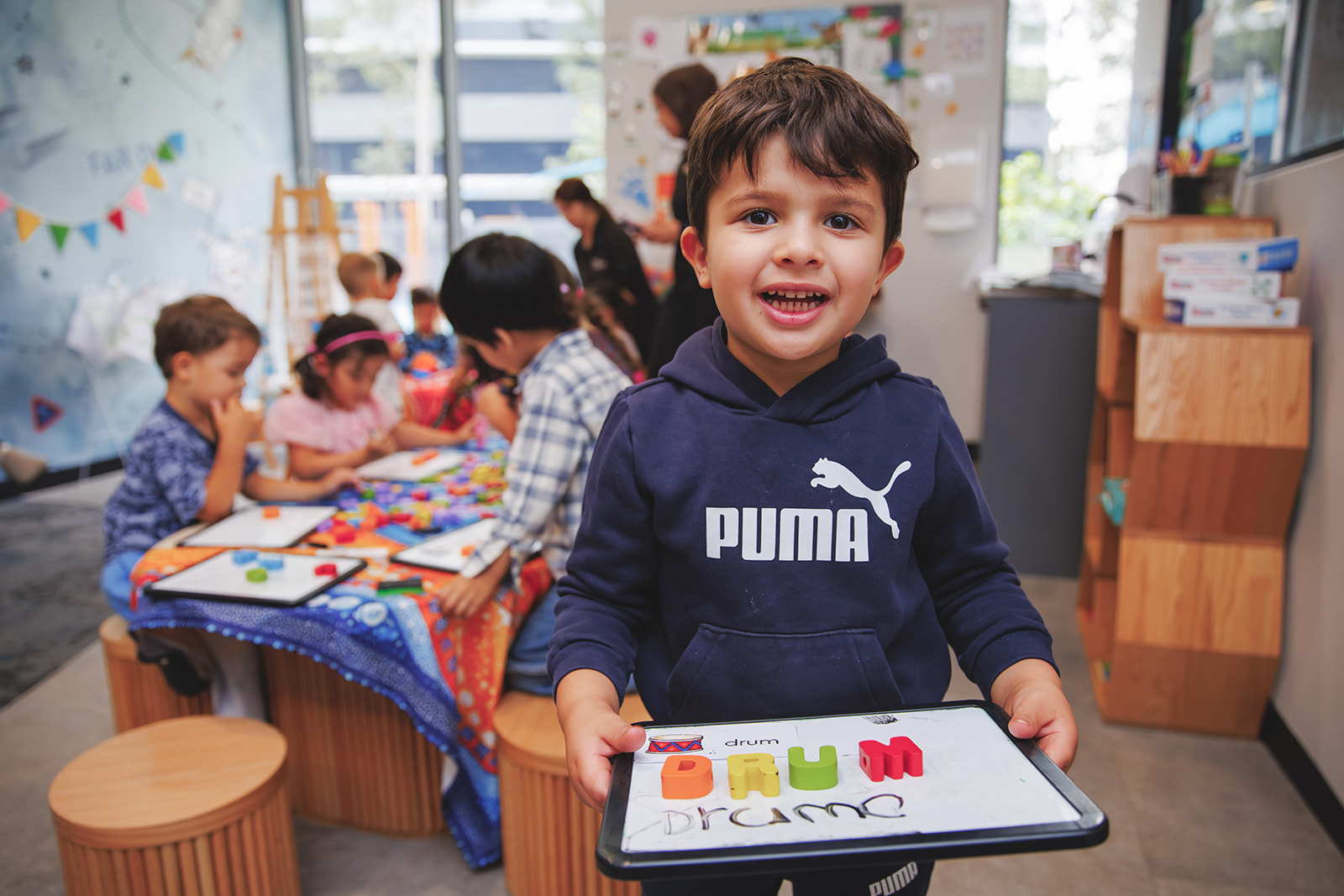
Learning doesn’t begin with picking up a pen and putting letters to paper. Nor does it start with learning the alphabet and being able to decipher words on a page. Before either of those things happen, any given child is already learning an incredible amount about language, communication, and the world around them. In early childhood, these foundational skills develop through play, relationships, exploration, and everyday interactions.
At centres like Mini Masterminds, educators understand that literacy development doesn’t start with letters on a page. It begins much earlier with listening, speaking, observing, and building confidence in communication. These early experiences form the building blocks children need before formal reading and writing begin.
Language Comes First
Long before children recognise letters, they learn how language works. Babies and toddlers begin by listening to voices, noticing tone, rhythm, and patterns in speech.
Through everyday interactions, children learn to:
These early language experiences help children understand that communication has meaning, which is essential for later literacy development.
Why do Children Need to Learn About Listening and Understanding?
Listening is a critical skill that develops well before reading. When children listen to stories, songs, and conversations, they begin to understand how language flows and how stories are structured.
Activities that support listening skills include:
Through these experiences, children learn how to follow narratives, recognise patterns in language, and stay engaged in communication.
How do Children Develop Fine Motor Skills?
Writing requires physical coordination, which takes time to develop. Before children hold a pencil correctly, they build strength and control in their hands through play.
Early activities that support writing readiness include:
These experiences strengthen the small muscles in children’s hands and fingers, helping them develop the control needed for writing later on.
Confidence in Communication
Children need to feel confident sharing their ideas before they begin writing them down. Early childhood environments encourage children to express themselves through conversations, storytelling, dramatic play, and group activities.
When children feel heard and valued, they become more willing to participate in communication and explore language.
Educators support this by:
This confidence becomes a powerful foundation for future literacy learning.
What is Curiosity and Imagination to a Child?
A love for stories and learning plays an important role in literacy development. When children explore books, pretend play, and storytelling, they begin to understand how ideas can be shared through words and images.
Examples include:
These experiences help children develop imagination, narrative thinking, and an interest in books, which are all essential before formal reading begins.
Social and Emotional Skills
Learning to read and write also requires patience, focus, and resilience. These skills are developed through social and emotional experiences in early childhood.
Children learn to:
These abilities help children stay engaged when learning more complex skills like reading and writing later on.
What is the Foundation for Lifelong Literacy for Children?
Reading and writing do not develop overnight. They are the result of years of early learning experiences that build language, confidence, coordination, and curiosity.
At Mini Masterminds, your local childcare for toddlers, babies and preschool aged children, educators support these foundational skills through play-based learning, meaningful conversations, our preschool program, and engaging environments that encourage children to explore language naturally.
By nurturing these early abilities, children are better prepared to take their first steps into reading and writing with confidence.
When do children start learning literacy skills?
Children begin developing literacy skills from birth. Listening to language, observing facial expressions, and responding to voices all contribute to early literacy development long before children start reading or writing.
Why is play important for early literacy?
Play helps children explore language, storytelling, and communication in a natural way. Through pretend play, conversations, and games, children practise many of the skills needed for reading and writing.
Do children need to know the alphabet before starting school?
Not necessarily. While recognising letters can be helpful, strong language skills, curiosity, and confidence in communication are often more important foundations for early literacy.
How can parents support early literacy at home?
Parents can support literacy by:
What role do early childhood educators play in literacy development?
Educators create environments that encourage conversation, exploration, and storytelling. Through intentional teaching and play-based learning, they support the development of language, communication, and early literacy skills.
Early Literacy
The foundational skills that support reading and writing development, including listening, speaking, vocabulary, and understanding stories.
Fine Motor Skills
Small muscle movements in the hands and fingers that are needed for tasks like holding a pencil, drawing, and writing.
Language Development
The process through which children learn to understand and use words, sentences, and communication.
Narrative Skills
A child’s ability to understand and tell stories, including recognising characters, events, and sequences.
Play-Based Learning
An educational approach where children learn through play, exploration, and hands-on experiences.
Vocabulary
The collection of words a child understands and uses when speaking and communicating.

 1300 336 464
 Book A Tour
 Enrol Now
 Contact Us
 Call Us