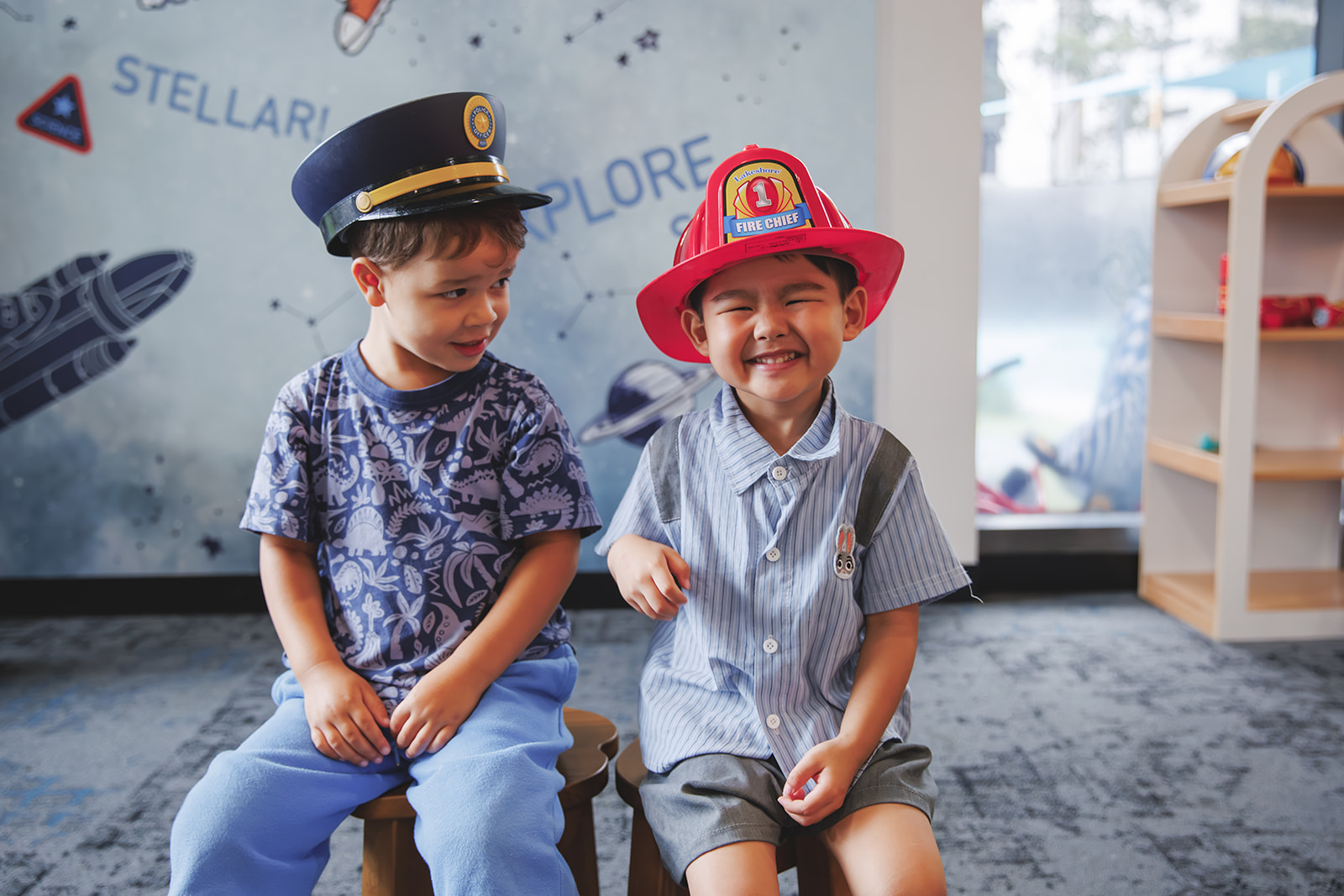
While play and learning are often the focus of early childhood education, it is critical not to overlook value of friendships. The relationships children form with their peers are just as powerful in shaping their emotional wellbeing and self-confidence.
In early learning environments, like ours at Mini Masterminds, friendships often begin through simple interactions, sharing toys, building together, laughing during group activities, or comforting one another. These early connections help children learn about themselves, how they relate to others, and how they navigate the social world around them.
During the early years, children are developing their sense of identity and belonging. Having a friend helps them feel accepted and valued, which plays a key role in building confidence.
When children feel connected to their peers, they are more likely to:
Positive peer relationships create a safe social environment where children feel comfortable being themselves.
Friendships are one of the first places children practice essential social and emotional skills. Through play and interaction, they begin to learn:
Communication skills
Children learn how to express their needs, listen to others, and take turns in conversations.
Empathy and understanding
By observing how their actions affect others, children begin to understand feelings and perspectives outside of their own.
Problem-solving
Disagreements are natural in friendships. With guidance from educators, children learn how to resolve conflicts, negotiate, and find solutions together.
Cooperation
Working together during play helps children understand teamwork and shared goals.
These skills are foundational not only for school readiness but for lifelong relationships.
When children feel they belong in a group, their self-confidence grows. Being included in games, having someone to play with, and feeling supported by peers reinforces a child’s belief in themselves.
Friendships provide opportunities for children to:
Even simple moments, like a friend asking them to join a game, can boost a child’s confidence and sense of self-worth.
Educators play an important role in helping children build and maintain healthy friendships. By creating inclusive environments and modelling respectful communication, educators guide children in forming positive social connections.
Strategies educators often use include:
When educators intentionally nurture these interactions, they help children develop the confidence to build meaningful relationships.
Families also play an important role in helping children develop social confidence. Encouraging playdates, talking about friendships, and helping children understand emotions can strengthen their ability to connect with others.
Parents and caregivers can support their child by:
These everyday conversations help children understand the value of friendships and the skills needed to maintain them.
The friendships children form in their early years can have lasting benefits. Positive peer relationships support emotional wellbeing, build resilience, and help children feel more confident navigating social situations as they grow.
Children who develop strong social connections early are often better prepared for school transitions and new environments. They carry with them the communication skills, empathy, and confidence they gained through those first friendships.
In early childhood education, friendships are more than just playmates — they are an essential part of a child’s development.
At what age do children start forming friendships?
Children can begin forming simple friendships as early as two to three years old. At this stage, friendships are often based on shared play and proximity, but they gradually become deeper as children develop social and emotional skills.
What if my child struggles to make friends?
It’s normal for some children to take longer to feel comfortable in social settings. Educators and families can help by encouraging group play, modelling social interactions, and providing opportunities for children to interact with peers in smaller groups.
Are conflicts between friends normal in early childhood?
Yes, disagreements are a natural part of learning social skills. Through conflict, children learn important lessons about communication, compromise, and empathy.
How can educators encourage friendships in early learning settings?
Educators can support friendships by creating collaborative activities, guiding children through conflicts, and ensuring that all children feel included and valued in the learning environment.
Confidence
A child’s belief in their own abilities, skills, and value within social situations.
Empathy
The ability to understand and share the feelings of another person.
Social Development
The process through which children learn how to interact with others, build relationships, and navigate social environments.
Cooperative Play
A type of play where children work together toward a shared goal, such as building something or playing a group game.
Sense of Belonging
The feeling of being accepted, included, and valued within a group or community.

 1300 336 464
 Book A Tour
 Enrol Now
 Contact Us
 Call Us