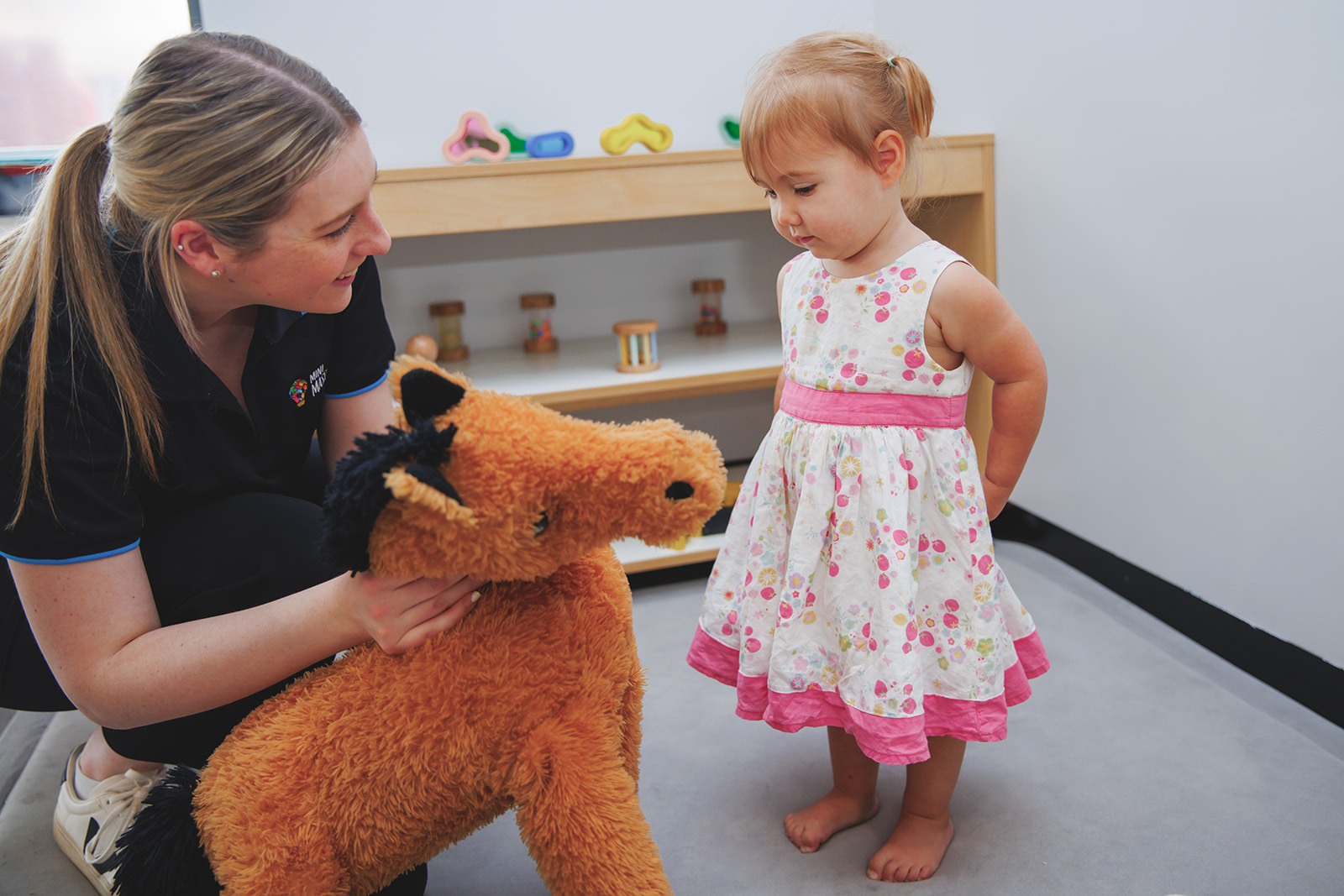
The toddler years mark one of the most exciting stages of early childhood development. Children move from being primarily dependent infants into active explorers who are eager to understand everything around them. This shift is often described as going from “crawling to curious,” as toddlers begin to walk, talk, question, and engage with the world in more intentional ways.
The toddler room at our Mini Masterminds early learning centres are designed to support this transition, providing a safe, stimulating environment where children can build confidence, independence, and foundational life skills through play and guided learning.
Toddlers are in a stage of rapid development across all areas, physical, cognitive, emotional, and social. Every day brings new discoveries and milestones.
During this stage, children typically begin to:
Because of this rapid growth, the toddler room is carefully structured to support both security and exploration.
Toddlers learn through experience rather than instruction. They need opportunities to touch, move, test, repeat, and interact with their environment.
Learning in the toddler room is built around:
Every activity is designed to support natural curiosity and help children make sense of the world at their own pace.
The toddler years are often marked by big emotions. Children are still learning how to express frustration, excitement, disappointment, and joy in appropriate ways.
Educators support emotional development by:
This guidance helps toddlers gradually develop self-regulation and emotional resilience, which are essential for later learning and relationships.
Language development expands rapidly during the toddler years. Children move from single words to short phrases and begin to understand increasingly complex instructions.
The toddler room supports communication through:
These experiences help children build confidence in both understanding and using language.
Play is the foundation of learning during the toddler years. It allows children to explore ideas, develop skills, and make sense of their environment in a natural way.
Common types of play include:
Each type of play supports different aspects of development, from problem-solving to emotional understanding.
The toddler environment is intentionally designed to encourage independence, exploration, and safety.
It typically includes:
These features allow children to confidently explore their surroundings while feeling secure and supported.
Educators in the toddler room act as guides and facilitators rather than traditional instructors. Their role is to observe, support, and extend children’s learning experiences.
They help by:
Strong, responsive relationships between educators and children are key to helping toddlers feel safe and confident.
The toddler room acts as an important bridge between infancy and preschool. It helps children gradually develop the skills needed for more structured learning environments.
Through daily experiences, toddlers build:
These foundations make the transition into preschool smoother and more positive.
What age is the toddler room for? The toddler room is generally for children aged 18 months to 3 years, depending on development and readiness. Educators work closely with families during this transition to ensure each child moves into the toddler room at the right time for them, taking into account their individual developmental stage and comfort level.
How do educators help children settle into the toddler room? Educators support smooth transitions through consistent routines, gentle reassurance, and strong relationships with each child. Families are also encouraged to be actively involved in the settling process, with educators communicating openly about how each child is adjusting and what strategies are working well at home and in the centre.
What does a typical day include? A typical day includes play-based learning, group experiences, outdoor play, meals, rest time, and structured routines. Each day is carefully balanced to give children a mix of active and quiet experiences, ensuring they have the opportunity to explore, create, socialise, and rest in ways that support their overall wellbeing and development.
Is play really how toddlers learn best? Yes. Play is the primary way toddlers learn about themselves, others, and the world around them. Through play, children develop language, build social connections, practise problem-solving, and make sense of their experiences — all in a way that feels natural, engaging, and intrinsically motivating for this age group.
Toddler Room An early learning environment designed for children approximately 18 months to 3 years old, focused on supporting rapid developmental growth through play, routine, and guided exploration.
Self-Regulation The ability to manage emotions and behaviour across different situations, gradually developed through supportive relationships and consistent routines during the toddler years.
Sensory Play Play that actively engages the senses — including touch, sight, sound, and movement — to support brain development and help children make sense of their environment.
Imaginative Play Pretend play that helps children explore roles, ideas, and social scenarios, supporting language development, creativity, and emotional understanding.
Parallel Play A stage of social development where children play alongside each other without directly interacting, which is common and developmentally appropriate during the toddler years.
Experience how children grow from crawling to curious exploration in a supportive learning environment at Mini Masterminds Erskineville childcare. Book a Tour today!

Sana is a highly experienced Early Childhood Teacher and qualified assessor, currently in the final stages of completing a Master’s degree in Education (Leadership). Her academic and professional journey reflects a strong commitment to continuous growth, reflective practice, and high-quality leadership within early childhood education.
View Full Bio

 1300 336 464
 Book A Tour
 Enrol Now
 Contact Us
 Call Us