In Summary
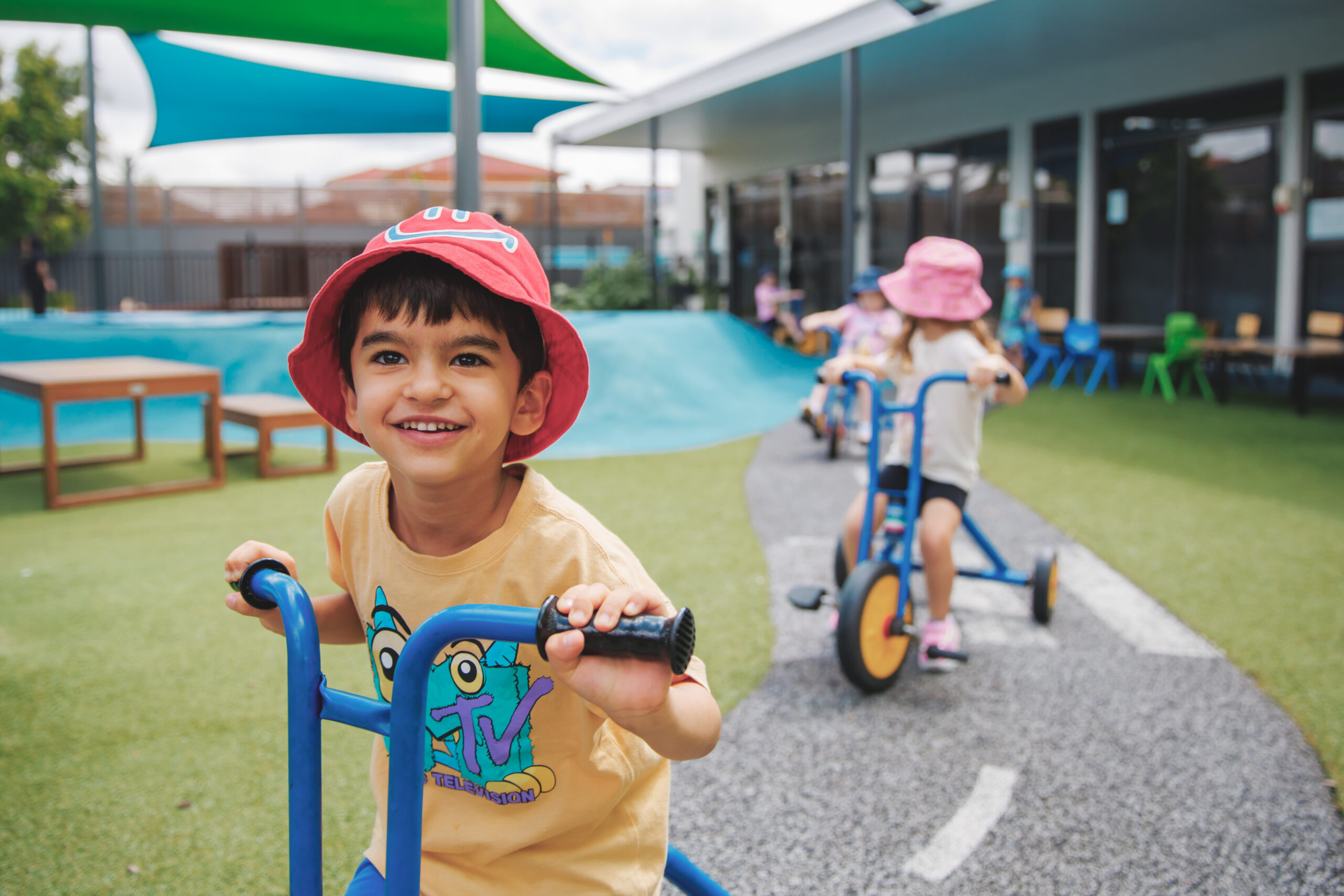
In early childhood, learning does not only happen while children are sitting at a table or listening during group time. Some of the most meaningful learning happens when children are moving, exploring, climbing, running, balancing, jumping, dancing, digging, building, and engaging with the world around them.
Movement and outdoor play help children understand their bodies, build confidence, practise communication, manage emotions, and learn through hands-on experience. For many children, outdoor play is where they take their first safe risks, form friendships, test ideas, and feel proud of what their bodies and minds can do.
At Mini Masterminds Schofields childcare, movement and outdoor play are important parts of each child’s early learning journey. Children are supported to move freely, explore safely, and participate in play-based learning experiences that build physical, social, emotional, and cognitive skills.
For families, this means knowing their child is not only staying active, but developing the confidence, resilience, curiosity, and independence that support lifelong learning.
Why Is Movement Important for Early Learning?
Young children are naturally active learners. They use movement to understand their bodies, explore their environment, communicate with others, and solve real-world problems. When children move, they are also developing the foundations for focus, coordination, confidence, and emotional regulation.
Movement supports children to:
Simple activities such as running, climbing, balancing, dancing, crawling, jumping, stretching, and ball games all contribute to important developmental milestones. These moments may look like play, but they help children build the skills they need for everyday life.
For example, climbing helps a child practise balance, strength, decision-making, and persistence. Dancing helps a child express emotion, follow rhythm, and coordinate movement. Ball games help children practise teamwork, turn-taking, hand-eye coordination, and communication.
In a quality Schofields childcare environment, movement is treated as an essential part of learning. It helps children feel capable, engaged, and ready to participate in the world around them.
How Does Outdoor Play Support Cognitive Development?
Outdoor play gives children space to explore, experiment, imagine, and think creatively. Unlike more structured indoor settings, outdoor environments often encourage open-ended play, where children can make choices, test ideas, and lead their own learning.
When children play outdoors, they are constantly making decisions. They may work out how to climb safely, how to build a structure, how to share equipment, how to move through an obstacle course, or how to use natural materials in imaginative play.
Outdoor play helps children develop:
These skills support more than physical development. They help children become active thinkers. A child building with sticks, sand, stones, or leaves may be exploring balance, size, shape, texture, pattern, cause and effect, and creative storytelling all at once.
Outdoor learning environments can also help children feel calmer and more engaged. Fresh air, open space, movement, and sensory play can support concentration and emotional wellbeing, helping children return to other learning experiences with greater focus.
At Mini Masterminds Schofields childcare, outdoor play is used to support whole-child development, helping children learn through movement, discovery, and meaningful hands-on experiences.
How Are Physical Activity and Emotional Wellbeing Connected?
Outdoor play and movement are closely connected to children’s emotional wellbeing. Physical activity gives children a healthy way to release energy, manage stress, express themselves, and build positive moods.
When children climb to the top of a structure, learn to balance, ride a bike, join a group game, or complete an obstacle course, they experience achievement. These moments help children feel proud, capable, and more willing to try again.
Movement-rich play can support children to:
Outdoor play also supports social development. Children learn to cooperate, take turns, negotiate, communicate, share space, and work together. These interactions help children build friendships and develop empathy.
For families, these outcomes matter because they support a child’s day-to-day confidence. A child who has regular opportunities for active play may become more comfortable joining group experiences, managing emotions, and engaging with peers.
In a nurturing Schofields childcare setting, educators can support these moments by helping children name feelings, solve social challenges, and celebrate progress. This helps children understand that movement and play are not only fun, but also powerful ways to build confidence and wellbeing.
Why Can Risky Play Be Beneficial for Children?
Appropriate risk-taking is an important part of childhood development. Children need opportunities to test their abilities, explore boundaries, make decisions, and build confidence in safe and supervised ways.
Risky play may include:
These experiences help children learn how to assess risk. A child deciding whether they can climb a little higher, balance across a beam, or jump from a safe height is learning to understand their body, judge distance, and make decisions.
Risky play does not mean unsafe play. It means giving children age-appropriate opportunities to challenge themselves while educators remain nearby to guide, supervise, and support. This helps children develop confidence without removing the chance to learn through experience.
For children, the outcome is often a stronger sense of capability. They begin to understand what they can do, when they need help, and how to approach challenges with care.
At Mini Masterminds Schofields childcare, outdoor environments are designed to encourage safe challenge, movement, and exploration while supporting each child’s developmental stage and confidence level.
Why Is Nature Important in Early Childhood Learning?
Spending time in nature gives children valuable sensory experiences and opportunities to connect with the environment. Natural play spaces encourage curiosity, creativity, mindfulness, and discovery.
Nature-based experiences may include:
These experiences help children learn with their whole body. They can touch, smell, observe, compare, question, move, and imagine. This kind of sensory exploration supports language development, problem-solving, creativity, emotional regulation, and environmental awareness.
Nature play can also help children slow down. A child watching an insect, watering a plant, digging in sand, or noticing changes in the weather is learning to observe carefully and connect with the world around them.
For families choosing Schofields childcare, outdoor learning and nature play can be important signs of a centre that values whole-child development. Children benefit when they have daily opportunities to explore both built and natural environments in safe, meaningful ways.
How Does Mini Masterminds Schofields Encourage Movement and Outdoor Play?
At Mini Masterminds Schofields childcare, movement and outdoor exploration are embedded into everyday early learning experiences. Children are encouraged to move freely, explore confidently, and participate in play-based activities that support their physical, social, emotional, and cognitive development.
Educators incorporate movement into daily routines through:
These experiences help children develop coordination, confidence, social skills, imagination, and self-regulation. They also give children opportunities to experience joy, achievement, and connection with peers.
The focus is on helping children feel safe enough to try, supported enough to persist, and confident enough to participate. Some children may run straight into outdoor play, while others may need time, encouragement, and gentle educator support. Both approaches are respected.
Families looking for high-quality Schofields childcare can feel confident knowing that movement-based learning and outdoor exploration are part of the way children learn each day. The goal is to help children thrive through active, meaningful, and age-appropriate play.
How Can Families Encourage Active Play at Home?
Families can support movement and outdoor learning at home through simple everyday experiences. Active play does not need to be complicated. It can happen in the backyard, at a local park, on a walk, or during everyday family routines.
Families can encourage active play by:
These activities help children build healthy habits while strengthening family connection. They also give children more opportunities to practise confidence, coordination, communication, and problem-solving.
For example, a family walk can become a chance to notice plants, count steps, balance on safe surfaces, talk about the weather, or ask questions about the environment. Dancing at home can support coordination, rhythm, emotional expression, and joy.
When families and educators both value active play, children receive a consistent message: movement matters. It helps them learn, feel good, build confidence, and understand their bodies.
How Does Movement and Outdoor Play Support Lifelong Learning?
Movement and outdoor play are far more than opportunities for children to burn energy. They are essential parts of early childhood learning and development, supporting physical growth, emotional wellbeing, creativity, confidence, independence, and cognitive skills.
Through active play, children learn how to try, practise, fall, adjust, cooperate, create, and keep going. These experiences help build the foundations for lifelong learning because they teach children that learning is active, social, and full of discovery.
By providing children with opportunities to move, explore, and engage with the outdoors, educators and families can help children develop strong foundations for school and life.
At Mini Masterminds Schofields childcare, children are supported to learn through play, movement, nature, and meaningful exploration every day. The centre provides nurturing environments where children can build confidence, form friendships, develop new skills, and grow at their own pace.
Families searching for Schofields childcare that values active learning, outdoor play, and whole-child development are invited to book a tour and experience the Mini Masterminds approach.
FAQs
Why is outdoor play important for children?
Outdoor play supports children’s physical, social, emotional, and cognitive development. It gives children space to move, explore, communicate, problem-solve, and build confidence through hands-on experiences.
For many children, outdoor play also supports emotional wellbeing by helping them release energy, manage stress, and feel more connected to their environment. In a Schofields childcare setting, outdoor play can help children become more engaged, resilient, and independent learners.
How much outdoor play should children have each day?
Children benefit from regular opportunities for active outdoor play every day. Daily movement supports physical health, emotional regulation, concentration, coordination, and social development.
The amount of outdoor play may vary depending on the child’s age, weather conditions, routines, and centre program. What matters most is that children have consistent opportunities to move, explore, rest, and participate in active learning experiences.
What are the benefits of movement-based learning?
Movement-based learning helps children develop coordination, balance, confidence, concentration, emotional regulation, and social skills. It allows children to learn through their bodies as well as through language, observation, and play.
Activities such as dancing, climbing, balancing, running, stretching, and obstacle courses can support both physical and cognitive development. In early learning environments, movement-based learning helps children stay engaged and build confidence in their abilities.
What is nature play in early childhood education?
Nature play involves children exploring and learning through natural environments and materials such as sand, water, plants, mud, leaves, sticks, and outdoor spaces. It encourages curiosity, sensory exploration, creativity, and environmental awareness.
Nature play also supports emotional wellbeing because it gives children space to slow down, observe, question, and connect with the world around them. In Schofields childcare programs, nature play can help children develop confidence, imagination, and problem-solving skills.
How does outdoor play prepare children for school?
Outdoor play helps children build independence, resilience, communication skills, problem-solving abilities, and social confidence. These are important foundations for school readiness because children need to manage routines, work with peers, express needs, and try new challenges.
Through outdoor play, children practise turn-taking, teamwork, emotional regulation, decision-making, and persistence. These skills help children feel more confident when transitioning into formal learning environments.
Is risky play safe for young children?
Risky play can be safe and beneficial when it is age-appropriate, supervised, and supported by educators. It gives children opportunities to test their abilities, assess challenges, and build confidence in a managed environment.
Examples may include climbing, balancing, jumping from low heights, or navigating uneven surfaces. These experiences help children develop coordination, judgement, resilience, and independence.
How can parents encourage more movement at home?
Parents can encourage movement at home through simple activities such as walking, dancing, ball games, gardening, playground visits, and outdoor exploration. These everyday experiences help children build coordination, confidence, and healthy habits.
It can also help to make active play part of the family routine. Even short periods of movement each day can support a child’s wellbeing, focus, and emotional regulation.
What should families look for in a Schofields childcare outdoor play program?
Families should look for a Schofields childcare program that provides safe, engaging, and age-appropriate outdoor spaces. The program should include opportunities for active play, nature play, sensory exploration, group games, creative movement, and quiet outdoor experiences.
It is also important to observe how educators support children outdoors. Quality outdoor play includes supervision, encouragement, emotional support, and opportunities for children to make choices and build confidence.
Glossary of Terms
Schofields Childcare
Childcare services located in or near Schofields that provide early education and care for young children. A quality Schofields childcare centre should support children’s learning, safety, wellbeing, confidence, and development.
Movement-Based Learning
An early learning approach that uses physical activity to support children’s development. It may include dancing, climbing, balancing, running, yoga, group games, obstacle courses, and active play.
Outdoor Play
Play that takes place outside and gives children opportunities to move, explore, communicate, create, and interact with their environment. Outdoor play supports physical, emotional, social, and cognitive development.
Gross Motor Skills
Physical skills involving large muscle groups, such as running, jumping, climbing, throwing, balancing, and crawling. Gross motor skills help children build strength, coordination, and body confidence.
Fine Motor Skills
Small muscle movements used for tasks such as drawing, writing, threading, cutting, building, and using tools. Fine motor skills support independence and school readiness.
Play-Based Learning
An educational approach where children learn through play, exploration, imagination, and hands-on experiences. Play-based learning supports communication, problem-solving, creativity, confidence, and social development.
Nature Play
Play experiences that involve natural materials and outdoor environments. Nature play may include sand, water, mud, plants, leaves, sticks, insects, gardening, and observing seasonal changes.
Risky Play
Age-appropriate play that allows children to test their physical abilities and build confidence through manageable challenges. Risky play is supervised and designed to help children learn judgement, resilience, and independence.
Sensory Exploration
Activities that engage the senses, including touch, sight, smell, sound, movement, and balance. Sensory exploration helps children understand their environment and supports learning through hands-on experience.
Emotional Regulation
A child’s developing ability to understand, express, and manage emotions. Movement, outdoor play, supportive routines, and educator guidance can all help children build emotional regulation.
School Readiness
The skills, behaviours, and confidence that help children transition successfully into primary school. School readiness includes independence, communication, social confidence, emotional regulation, resilience, and curiosity.
Whole-Child Development
An approach to early learning that supports every part of a child’s development, including physical, social, emotional, cognitive, language, and wellbeing needs.

Maisah brings a wealth of knowledge and leadership experience to the Mini Masterminds Education Team. She holds a Bachelor of Social Science and a Master of Teaching, providing her with a strong foundation in child development, learning theory, and educational practice.
View Full Bio

 1300 336 464
 Book A Tour
 Enrol Now
 Contact Us
 Call Us