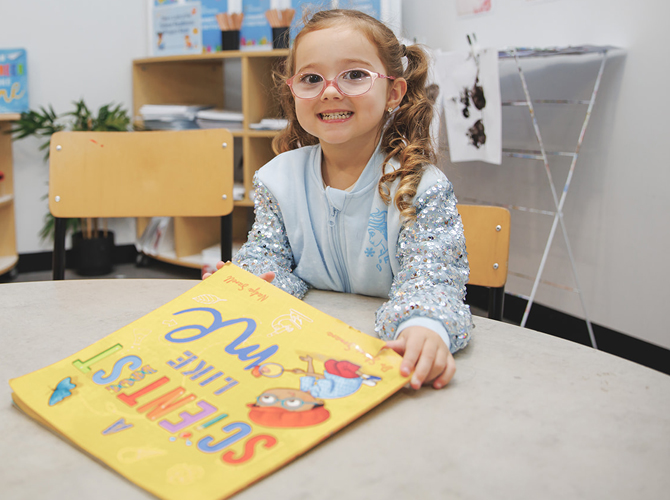
In Summary
Confidence and independence are some of the most important skills children develop in the early years. Long before a child begins primary school, they are already learning how to make choices, ask for help, solve problems, communicate their needs, build friendships, and try new experiences.
These early learning experiences shape how children see themselves. A child who feels capable is more likely to participate. A child who feels supported is more likely to try again after a challenge. A child who is encouraged to make decisions is more likely to build confidence in their own abilities.
At Mini Masterminds, children are supported to become confident and independent learners through play-based learning, nurturing educator relationships, consistent routines, and meaningful everyday experiences. The goal is to help every child feel safe, valued, curious, and ready to grow at their own pace.
For families, this means knowing their child is developing more than early academic skills. They are building emotional confidence, social connection, self-help skills, resilience, and a positive attitude towards learning that can support them well beyond the early years.
Learn more about Mini Masterminds early learning and the programs available across our centres.
Confidence helps children feel secure in who they are and what they can do. In early childhood, children are constantly encountering new environments, routines, people, emotions, and expectations. When they feel supported, they can approach these experiences with curiosity rather than fear.
A confident child may be more willing to join a group activity, speak to an educator, try a new experience, ask a question, build a friendship, or attempt a task independently. These moments may look small from the outside, but for a child, they can be important steps towards self-belief.
Confident children are often more willing to:
Confidence also supports emotional wellbeing. When children feel encouraged and understood, they are more likely to develop resilience, adaptability, and a sense of trust in themselves.
Families and educators both play an important role in building confidence in early childhood. Celebrating effort, encouraging curiosity, offering reassurance, and recognising progress all help children feel capable and valued. Over time, these experiences help children develop the confidence to keep learning, even when something feels difficult.
Children develop independence gradually through everyday experiences. They begin by trying small tasks, making simple choices, and learning that they can contribute to their own routines. With the right support, these moments help children build confidence, responsibility, and problem-solving skills.
In early learning environments, independence is encouraged through simple but meaningful daily experiences, such as:
These moments give children opportunities to practise self-help skills in a safe and supportive environment. A child who learns to put on their hat, carry their bag, or choose an activity is also learning that their actions matter.
Independence does not mean children are expected to do everything alone. It means they are given time, encouragement, and age-appropriate opportunities to try. Educators remain nearby to guide, reassure, and step in when support is needed.
For families, encouraging independence can lead to better everyday outcomes. Children may become more confident with routines, more willing to help, and more comfortable trying new tasks. This can support smoother mornings, stronger self-esteem, and a growing sense of capability.
Play-based learning is one of the most effective ways to help children become confident and independent learners. Through play, children explore ideas, test possibilities, make decisions, communicate with others, and learn from experience.
Play gives children the freedom to try, adjust, repeat, and discover. It allows them to take safe risks in a supportive environment, whether they are building a tower, joining imaginative play, solving a puzzle, creating artwork, or negotiating roles with friends.
Through play-based learning, children develop:
Children build language and social confidence through storytelling, role play, music, group discussions, and collaborative activities. These experiences help children express ideas, listen to others, and practise using words to solve problems.
Activities such as puzzles, construction play, sensory exploration, and imaginative scenarios encourage children to think critically. They learn to test ideas, try different solutions, and keep going when something does not work the first time.
Play helps children practise patience, manage frustration, navigate friendships, and recover from disappointment. These experiences help children understand emotions and develop strategies for coping with challenges.
Creative play gives children opportunities to express themselves and follow their interests. This helps children see learning as something active, enjoyable, and connected to their own ideas.
Group activities and collaborative play help children practise sharing, turn-taking, cooperation, empathy, and friendship-building. These social skills support children in childcare, school, and everyday life.
When children are encouraged to explore freely and follow their interests, they become more engaged in learning. They begin to see themselves as capable learners who can ask questions, try new things, and contribute to the world around them.
Families can also explore the Mini Masterminds childcare centres across Sydney to learn more about the early learning environments available.
Quality early learning centres create environments where children feel safe enough to participate, explore, and take small steps towards independence. The right environment does more than provide activities. It helps children feel known, respected, and supported.
Educators play an important role in helping children develop confidence and independence by:
Every child develops differently. Some children confidently try new experiences straight away, while others need more time, reassurance, or gentle encouragement. A person-centred approach recognises these differences and supports each child at their own pace.
For one child, independence may mean saying goodbye confidently at drop-off. For another, it may mean joining group time, putting on their shoes, asking for help, sharing with a peer, or trying an unfamiliar activity. Each step matters because each one helps the child build trust in themselves.
At Mini Masterminds, early learning environments are designed to support children emotionally, socially, and developmentally. Children are encouraged to participate actively in their learning while knowing that educators are there to guide and support them.
Consistent routines help children feel safe because they know what to expect. When the day has a familiar rhythm, children can move through transitions with more confidence and less uncertainty.
Daily routines in early learning settings may include:
These routines help children develop time awareness, responsibility, patience, and self-regulation. They also give children repeated opportunities to practise independence in familiar ways.
For example, a child may learn to wash their hands before meals, pack away after play, sit with peers during group time, or prepare for rest. Over time, these repeated experiences help children feel more capable because they know what comes next and how they can participate.
Routines also support emotional security. For young children, predictability can reduce anxiety and help them feel more in control of their environment. When children feel secure, they are more likely to engage, communicate, explore, and learn.
Families play an essential role in helping children build confidence, independence, and self-esteem. Everyday moments at home can give children valuable opportunities to practise skills they are also developing in early learning environments.
Parents and caregivers can support confident learners by:
Allow children to make simple choices, such as choosing between two outfits, snacks, books, or activities. These choices help children feel heard and build confidence in their preferences.
Focus on persistence, problem-solving, and trying rather than perfection. When children hear that their effort matters, they are more likely to keep going when tasks feel challenging.
Simple tasks such as packing away toys, helping set the table, carrying their bag, or feeding a pet can build responsibility. These moments help children see themselves as capable contributors.
Give children time to think through challenges before stepping in. Gentle prompts such as “What could we try next?” can help children develop confidence in solving problems.
Playdates, family gatherings, group activities, and community experiences can help children build social confidence. These interactions help children practise communication, sharing, turn-taking, and empathy.
Independent play encourages imagination, creativity, concentration, and self-direction. It also gives children space to follow their own ideas and develop confidence in their choices.
When families and educators encourage the same skills, children benefit from consistency. They begin to understand that they are trusted, supported, and capable in different environments.
As children build confidence and independence, they develop lifelong skills that support learning, relationships, wellbeing, and future school transitions.
These skills include:
These abilities help children navigate everyday situations with more confidence. A child who can communicate their needs, manage emotions, make choices, and try again after setbacks is better prepared for both formal schooling and wider social experiences.
Independent learners are often more willing to embrace challenges because they have had practice taking small risks in safe environments. They learn that mistakes are part of learning and that asking for help is a strength.
For families, these outcomes can be seen in everyday moments: a child trying to dress themselves, speaking up when they need support, joining play with peers, persisting with a puzzle, or feeling proud after completing a task.
Children thrive when they feel emotionally safe. Strong relationships with educators and caregivers help children feel secure enough to explore, participate, express themselves, and take steps towards independence.
Positive emotional support helps children:
Emotional support is especially important when children are facing transitions, unfamiliar activities, big feelings, or social challenges. A child who feels listened to and respected is more likely to trust the adults around them and feel safe trying again.
At Mini Masterminds, educators support children by recognising their emotions, encouraging communication, celebrating progress, and providing guidance when challenges arise. This helps children understand that their feelings matter and that they can develop the skills to manage them.
When children feel emotionally secure, they are more likely to develop positive learning behaviours. They can participate more confidently, connect with others more easily, and approach new experiences with greater resilience.
Every child develops confidence and independence differently. Some children naturally seek out new experiences, while others need more time to observe, settle, and feel comfortable. Both pathways are valid.
The role of families and educators is to provide steady encouragement, safe opportunities, and supportive relationships that help each child take the next step. Over time, these small steps become the foundation for confidence, resilience, and lifelong learning.
By combining play-based learning, consistent routines, emotional support, and opportunities for independence, children can become capable, curious, and confident learners.
Families preparing children for school can also explore the Mini Masterminds Prep School program, which supports independence and school readiness.
At Mini Masterminds, every child is supported as an individual. Educators take the time to understand each child’s interests, strengths, needs, routines, and developmental stage, so learning can feel meaningful and achievable.
Our nurturing early learning environments encourage children to explore, problem-solve, build friendships, express themselves, and develop important life skills through play-based education and supportive routines.
Families searching for quality childcare in Bexley can feel confident knowing their children are supported by passionate educators who focus on each child’s development, wellbeing, and confidence.
For children, this means having a safe and engaging place to learn, belong, and grow. For families, it means knowing their child is supported to build the skills, confidence, and independence they need for the future.
If you are looking for an early learning centre that supports your child’s confidence and independence, book a tour today and discover the Mini Masterminds difference.
Children develop confidence through supportive relationships, positive reinforcement, play-based learning, and opportunities to try new things independently. When children feel safe and encouraged, they are more likely to participate, communicate, and explore.
Confidence also grows when children experience success in everyday routines, such as completing a task, joining play, making a choice, or asking for help. These small achievements help children build trust in their abilities.
Independence helps young children build self-esteem, resilience, responsibility, and problem-solving skills. It teaches children that they are capable of contributing to routines, making choices, and trying tasks for themselves.
When children are supported to become more independent, they often feel more confident in childcare, at home, and during transitions. Independence also supports school readiness by helping children practise self-help skills, communication, and emotional regulation.
Play-based learning is an early childhood education approach where children learn through play, exploration, creativity, and social interaction. It allows children to discover ideas, test solutions, communicate with others, and follow their interests.
Through play-based learning, children develop confidence, independence, social skills, creativity, and problem-solving abilities. It helps children see learning as active, enjoyable, and connected to their own experiences.
Educators support confident learners by creating safe, nurturing, and predictable environments where children feel valued. They encourage children to try tasks independently, ask questions, express ideas, and take part in learning experiences.
Educators also provide guidance without taking over, which allows children to build confidence through practice. By recognising each child’s progress and responding to their individual needs, educators help children feel capable and supported.
Parents can encourage independence by giving children age-appropriate choices, responsibilities, and opportunities to complete simple tasks. This might include choosing clothes, packing away toys, helping prepare meals, carrying belongings, or attempting self-care routines.
It is also helpful to give children time to try before stepping in. When parents encourage effort and problem-solving, children learn that they are capable of working through challenges with support.
Independent learning skills include communication, decision-making, self-help skills, emotional regulation, problem-solving, creativity, collaboration, and resilience. These skills help children participate more confidently in learning and everyday routines.
Examples may include asking for help, choosing an activity, trying a new task, managing frustration, packing away materials, or working with peers. These everyday experiences build the foundations for future learning.
Routines help children feel secure because they know what to expect throughout the day. This predictability can reduce anxiety, support smoother transitions, and help children participate more independently.
Consistent routines also help children develop responsibility, time awareness, self-regulation, and confidence. Over time, children begin to understand daily patterns and feel more capable within their environment.
Early learning prepares children for school by supporting social, emotional, communication, independence, and problem-solving skills. These skills help children feel more confident when entering new environments, following routines, and engaging with peers and educators.
School readiness is about more than early academics. It includes confidence, resilience, self-help skills, emotional regulation, curiosity, and the ability to participate positively in group learning.
Families can learn more about school readiness through the Mini Masterminds Prep School program.
An early childhood education approach where children learn through play, exploration, creativity, and hands-on experiences. It supports communication, confidence, problem-solving, imagination, and social development.
Education and care provided to young children before they begin primary school. Early learning supports emotional, social, cognitive, physical, and communication development.
A child’s ability to make choices, complete age-appropriate tasks, participate in routines, and try new experiences with growing confidence. Independence develops gradually with support and encouragement.
A child’s belief in their ability to participate, try, communicate, and learn. Confidence grows through positive relationships, encouragement, safe challenges, and repeated opportunities for success.
The ability to manage emotions, adapt to challenges, and recover from setbacks. In early childhood, resilience is supported through secure relationships, emotional guidance, and opportunities to try again.
The skills, behaviours, and confidence that help children transition into formal schooling. School readiness includes independence, communication, emotional regulation, social skills, curiosity, and early learning foundations.
Encouragement, recognition, and praise used to support children’s effort, behaviour, confidence, and learning. Positive reinforcement helps children feel capable and motivated.
Everyday skills that help children care for themselves and participate in routines. Examples include washing hands, putting on shoes, packing away belongings, serving food, and asking for help.
A child’s developing ability to understand, express, and manage emotions. This skill helps children navigate frustration, transitions, friendships, and new experiences.
A child’s ability to interact with others, join play, communicate ideas, share, take turns, and build friendships. Social confidence supports positive relationships in childcare, school, and community settings.
Play that a child initiates or continues with limited adult direction. Independent play supports creativity, concentration, decision-making, imagination, and self-confidence.
Predictable daily patterns that help children feel secure and understand what comes next. Supportive routines can reduce anxiety, build confidence, and encourage independence.

Maisah brings a wealth of knowledge and leadership experience to the Mini Masterminds Education Team. She holds a Bachelor of Social Science and a Master of Teaching, providing her with a strong foundation in child development, learning theory, and educational practice.
View Full Bio

 1300 336 464
 Book A Tour
 Enrol Now
 Contact Us
 Call Us